Why the same battle keeps happening (it's rarely about the battle)
Updated October 2026 · By Hom, a parent and the founder of Lenio
The battle keeps returning because your reaction is often bigger than the moment calls for, built from things underneath it: old history, exhaustion, a rule from your own childhood. Naming what's underneath tends to shrink the battle more than a new script ever does.
A minute for what happened today
Lenio asks the first question. No account needed.
We use anonymous patterns from chats to make Lenio better. Privacy
Your conversation is waiting
You can return without starting again.
Keep this conversation with you
Your conversation is complete. You can continue with Lenio for seven days.
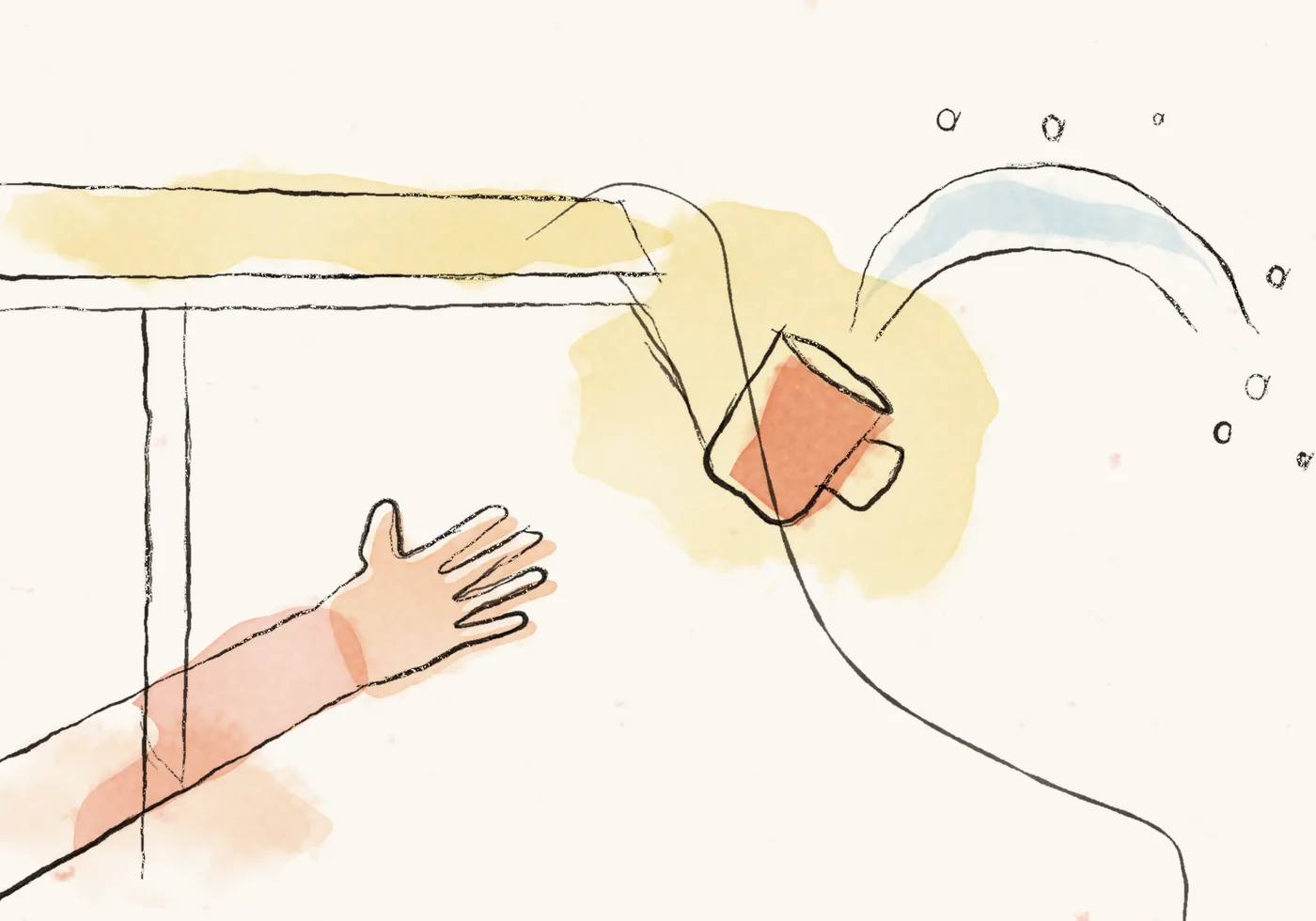
The tenth time about the shoes
Every family has one. Shoes, teeth brushing, getting in the car seat, turning off the tablet, the specific whine your youngest does when they don't get their way. You've tried the calm version, the firm version, the sticker chart, the count to three. None of it holds for more than a week, and every single time, your reaction to it feels a size too big for a nine-year-old refusing to put their shoes on.
What makes it more confusing is that you're not generally a shouty person. You can hold your patience through illness, tantrums in public, a broken washing machine on a school morning. Then the shoes happen, and something in you flares that seems to belong to a different, much less patient version of yourself. That contrast is often the biggest clue of all.
That mismatch, a small moment and a reaction that outruns it, is the thing worth paying attention to: a genuinely useful signal, telling you something specific, if you know how to read it.
What's actually going on when you're triggered
Being triggered simply means your reaction is drawing on more than the moment in front of you. Somewhere in your body, this particular scene, the whine, the defiance, the ignored request, is landing on top of older material: a memory of being spoken to a certain way as a child, an old rule about what a "good" child does, sheer exhaustion stacked from months of interrupted sleep. Your nervous system doesn't file all of that separately. It responds to the whole stack at once, which is why a request about shoes can produce a reaction that would make more sense for something ten times bigger.
This is how everyone's mind works, and it happens to every parent, about something.
What tends to sit underneath
A few of the most common things parents find once they start looking, offered here in case any of them land:
- Old rules about behaviour. If you were taught that talking back, or crying, or saying no to an adult, wasn't allowed, your child doing exactly that can land as far more provocative than it actually is.
- A memory of your own childhood. Certain tones of voice, certain kinds of defiance, can pull you straight back to how a parent or teacher once spoke to you, without you consciously noticing the connection in the moment.
- Exhaustion and depletion. A request that would barely register on a rested Tuesday can feel like the last straw at the end of a long week. Sometimes the trigger is less about history and more about simple capacity. Researchers who study parental burnout describe emotional exhaustion as one of its three core parts.
- A fear about who they'll become. Some battles carry a worry underneath them, that this small behaviour is a preview of a bigger problem later. The fear is doing more of the shouting than the actual moment deserves.
Why it's often just one child, or one behaviour
Plenty of parents notice the same reaction doesn't happen with every child in the house, only one, or happens with a specific behaviour rather than others that look just as difficult from the outside. Personality plays a real part here. A strong-willed child can pull harder on a parent's own history of needing to be agreeable, and a dreamy, slow-moving child can pull hard on a parent whose own childhood ran on urgency and speed. Birth order matters too: the eldest often catches the sharpest edge of a parent still learning the ropes, while a younger sibling gets a calmer version of the same parent a few years later.
None of this is the child's doing, and it isn't a verdict on the relationship either. It simply means the match between your particular history and this particular child's particular way of being creates more friction in this one spot than anywhere else. Once you can see it that way, it tends to feel less personal, on both sides.
How to notice reactive parenting as it happens
Reactivity is usually a sequence: something happens, your mind gives it a fast meaning, your body mobilises, and then you act. Separate the event from the meaning. “The shoes are still off” is an observation; “they never listen” is an interpretation. Respond to the observation now and examine the interpretation later. Also notice which child, behaviour or time of day repeats. The pattern tells you where to make one practical change. In one brain-imaging study, putting a feeling into words reduced the response of the amygdala, so naming what you noticed may help.
What this isn't
A trigger does not mean your child is provoking you on purpose or that the relationship is damaged. It is a repeatable pattern, not a life sentence, and patterns can change once you can see their shape.
Next time the battle happens, notice one thing only: was the size of your reaction about this moment, or bigger than it. You don't have to do anything with the answer yet. Just notice, and see what happens.
a free one-minute lesson
Where do you feel it first?
Same battle, same ending? It starts in your body a few seconds before. Think of the last time you snapped. Where did it show up in your body?
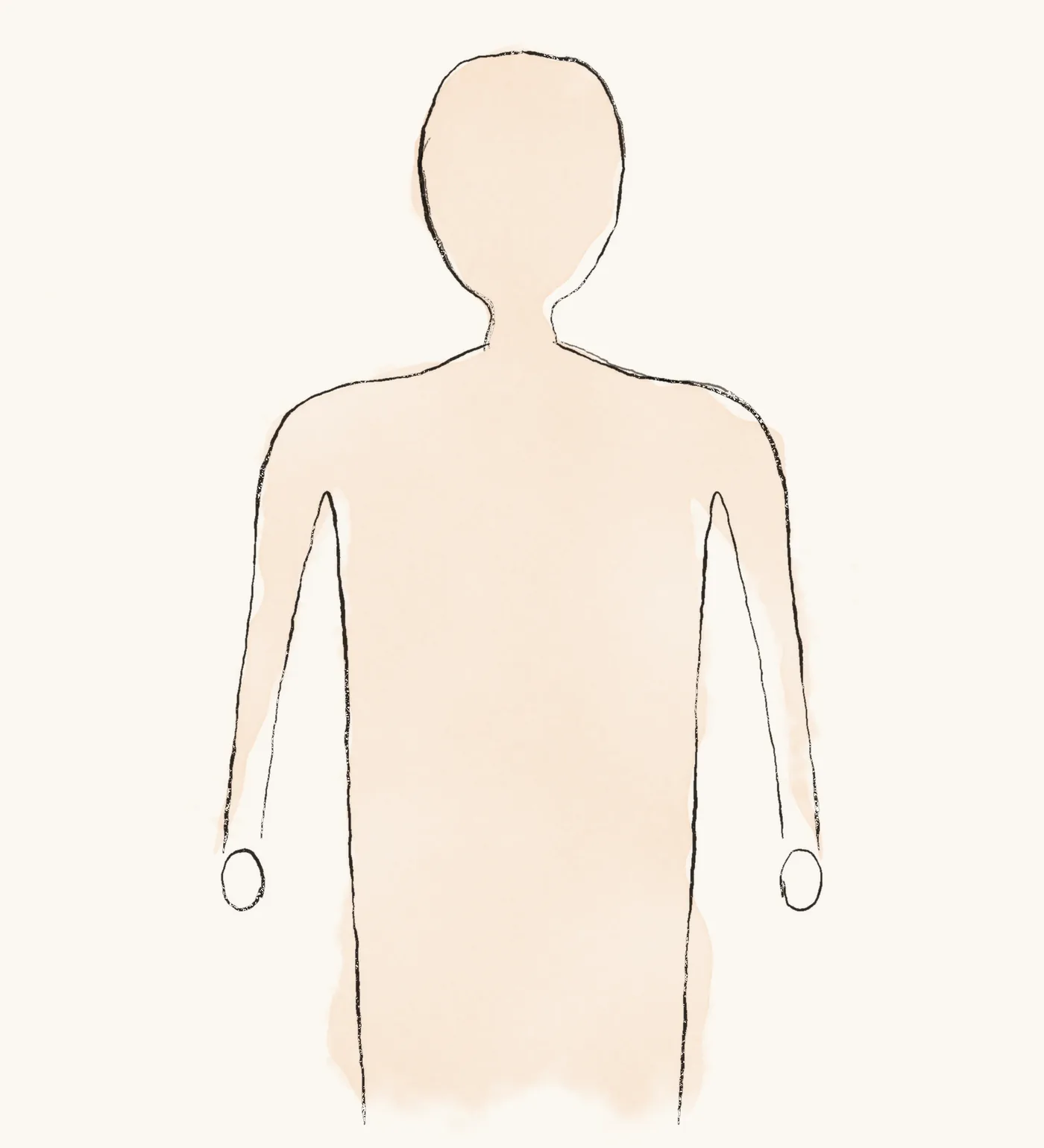
Tap the one that fits. There is no wrong answer.
Before the shout teaches the rest: what loads you up, the seconds before you snap, and what to say afterwards. Six short lessons, with 3 months of Lenio for the hard moment itself.
What changes once you notice
Noticing the pattern rarely makes the battle disappear overnight, and that's a fair thing to expect from a habit that's had years to settle in. What it does, fairly quickly, is give you a half-second more room the next time it happens. That half-second is often enough to choose a different response than the one that's on autopilot, or simply to be gentler with yourself afterwards, because you can see the reaction for what it actually was rather than taking it as proof of something wrong with you or your child.
If the pattern seems tied specifically to your own childhood rather than to tiredness or fear, When your childhood turns up at bedtime goes further into that particular thread. And if you notice the battle mostly happens when you're at your most depleted, Scripts fail because you're flooded explains why the calm phrase you rehearsed disappears exactly when you need it most.
Somewhere to talk through the pattern, out loud, with someone who won't rush you to a fix, also helps more than it sounds like it should. That's the whole idea behind the deeper conversations in Lenio: not homework, just a proper look at why the battle keeps returning.
Questions parents ask
Why does my child trigger me so much?
Because the reaction may carry exhaustion, old rules about behaviour or memories of how you were treated at their age. Its size is a clue that more than the present moment is involved.
Is it normal to be triggered by my own child?
Yes. Most parents have a particular tone, behaviour or situation that produces a reaction larger than the moment. The useful question is what makes this one land differently.
Does being triggered by my child mean something is wrong with me?
No. A trigger usually reflects ordinary history, fear or tiredness. Noticing the pattern gives you information; it is not a verdict on you or the relationship.
How do I stop the same battle happening every day?
Track which moment repeats, your first body signal and what is usually true about that part of the day. Change one condition before changing your words: timing, hunger, noise or how many instructions arrive at once.
How do I stop being reactive with my child?
Separate the event from its meaning. “The shoes are still off” is an observation; “they never listen” is an interpretation. Respond to the observation now and examine the interpretation later. That removes some of the extra weight.
Sources
- Lieberman, M. D. and colleagues (2007). Putting feelings into words: affect labeling disrupts amygdala activity in response to affective stimuli. Psychological Science, 18(5).
- Roskam, I., Raes, M.-E. and Mikolajczak, M. (2017). Exhausted parents: development and preliminary validation of the Parental Burnout Inventory. Frontiers in Psychology, 8, 163.