When your childhood turns up at bedtime
Updated October 2026 · By Hom, a parent and the founder of Lenio
Sometimes the child in front of you shares the room with the child you once were: a phrase, a look, a small refusal calls up how you were parented, decades ago. These parenting triggers from your own childhood are common, ordinary even, and noticing it usually loosens its grip more than fighting it does.
A minute for what happened today
Lenio asks the first question. No account needed.
We use anonymous patterns from chats to make Lenio better. Privacy
Your conversation is waiting
You can return without starting again.
Keep this conversation with you
Your conversation is complete. You can continue with Lenio for seven days.
The phrase that isn't really about tonight
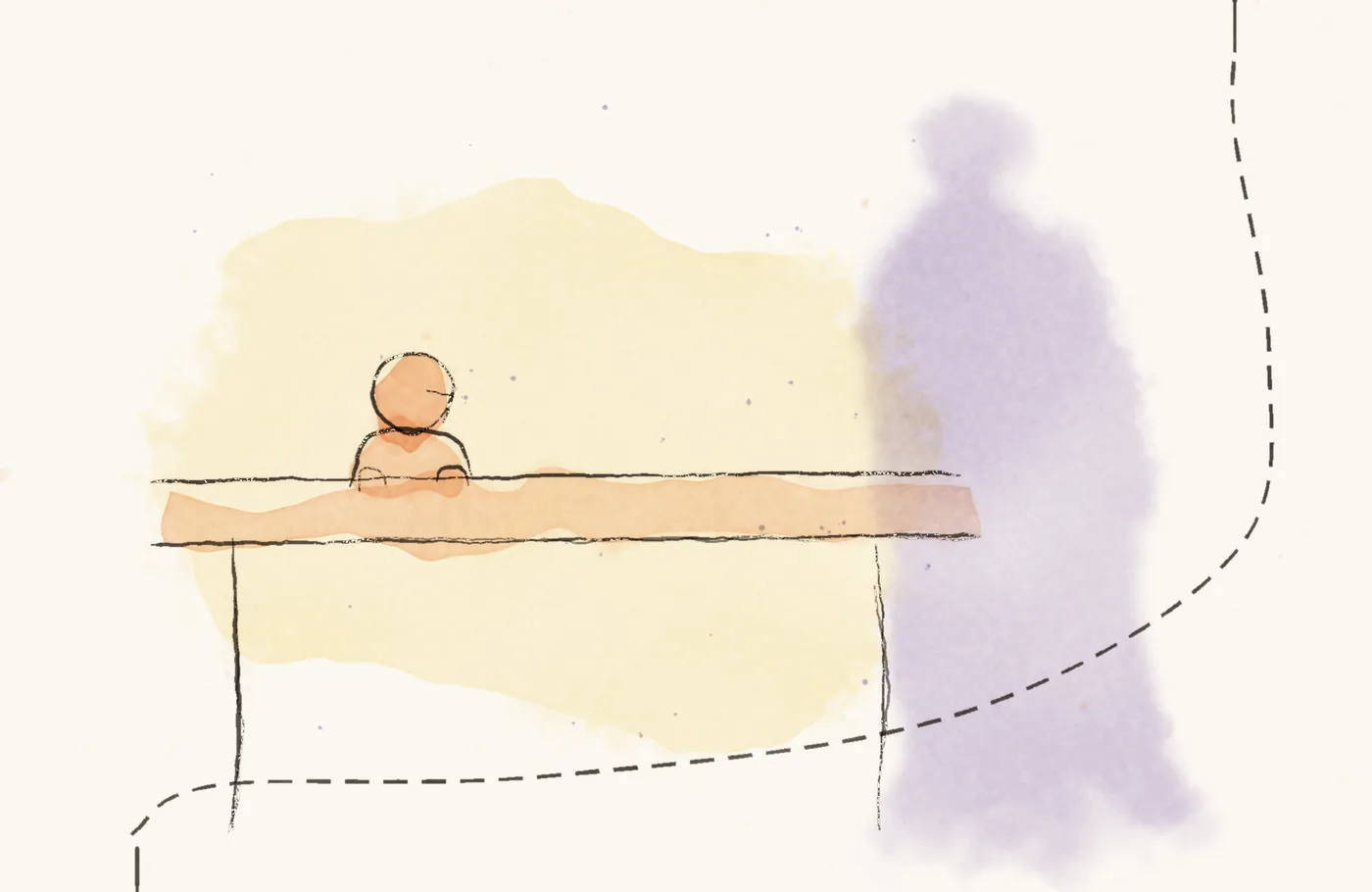
Your child says "you never let me do anything", or refuses to get into bed for the fifth night running, or cries in a particular register, and something in you reacts far harder than the moment seems to warrant. Later, lying awake, you realise the feeling wasn't really about tonight's book or tonight's tears. It had a texture you recognised from somewhere much older, a bedroom that wasn't this one, a version of you who was small once too.
This is what people sometimes call reparenting while parenting, and it's more common than the quiet around it suggests. Almost nobody talks about it out loud, which is a shame, because knowing it has a name and a shape helps enormously with the part that feels frightening about it.
Why bedtime specifically
Bedtime is close, dim, slow, and physically near in a way most of the day isn't. You're tired by then too, which lowers your own defences at exactly the moment your child's are also lowest. Add in the fact that bedtime itself, as a ritual, was something done to you as a child, with its own rules and its own feelings attached, and it's easy to see why this particular hour of the day pulls old material closer than 8am at the school gate ever does.
It isn't always anger
Most of what gets written about parenting triggers focuses on anger, but bedtime brings up plenty of other feelings too. A tender, almost aching love as you watch them sleep can carry an old longing to have been tucked in that gently yourself. A flash of envy can surface, quiet and a little shameful, at how easily your child asks for a hug when that wasn't something you were taught to do. Sadness sometimes arrives sideways, for the childhood you had or the one you wished you'd had, right in the middle of an ordinary bedtime story. None of these count as anything to fix. They're simply more of the same crossover, felt in a softer register.
What helps in the moment
Naming it to yourself, silently, is often enough to loosen it: "this feels old" or "some of this isn't about tonight." You don't need to work out the whole story right there in the doorway. One slow breath and a small mental note is plenty. Then bring yourself back to what's actually in front of you: this particular child, this particular age, this particular, ordinary bedtime request. The old feeling doesn't have to be resolved before you can finish the story and turn off the light. In one brain-imaging study, putting a feeling into words reduced the response of the amygdala, which is one reason naming “this feels old” may help.
Breaking the cycle does not require a perfect response
Name the inherited rule, then choose your own value. “A good child obeys immediately” might become “I can hold a firm boundary without making closeness conditional.” This gives you somewhere to move towards, not only something to run from.
Change the aftermath too. If conflict once ended in silence, denial or blame, name the shout, own it without a “but”, restate the boundary calmly and reconnect. For help before the shout, see how to stop shouting at your children.
If a bedtime moment feels bigger than it should, try the two words "this is old" in your head before you respond. You don't have to explain it to anyone, not even yourself. Just notice it, and see whether the moment softens.
a free one-minute lesson
Where do you feel it first?
Old patterns move fast. Your body notices them before your head does. Think of the last time you snapped. Where did it show up in your body?

Tap the one that fits. There is no wrong answer.
Before the shout teaches the rest: what loads you up, the seconds before you snap, and what to say afterwards. Six short lessons, with 3 months of Lenio for the hard moment itself.
Questions parents ask
Why does parenting bring up my own childhood?
Parenting puts you near experiences you once had from the other side: bedtime, tears, rules and comfort. A familiar tone can bring an old feeling forward before you recognise the connection. Noticing the overlap helps separate then from now.
How do I stop repeating my parents' parenting?
Name the inherited rule, then choose your own value. “A good child obeys immediately” might become “I can hold a firm boundary without making closeness conditional”. A chosen value gives you a direction; becoming your parents' opposite still lets their rule set the terms.
How do I break the cycle of shouting?
Change the aftermath as well as trying to prevent the next shout. If conflict once ended in silence, denial or blame, repair differently: name the shout, own it without a “but”, restate the boundary calmly and reconnect.
When it's heavier than a bedtime feeling
Sometimes what surfaces is more than a passing echo. If a particular memory keeps returning with real distress, or if bedtime regularly leaves you shaken well beyond the evening, that's worth taking somewhere with proper support, a GP, a health visitor, or a counsellor who works with this specifically. The material deserves more room than a bedtime routine can give it, and asking for that room is a strong, sensible thing to do for yourself and your family. The NHS says that for many problems, such as anxiety and depression, you can refer yourself to NHS talking therapies without speaking to a GP first.
For the pattern behind this one, not just bedtime but the battles that repeat across the whole day, Why the same battle keeps happening goes into what usually sits underneath a reaction that's bigger than the moment. And if the old feeling tends to arrive alongside sheer exhaustion rather than a specific memory, Scripts fail because you're flooded is the companion piece for that.